
A new world, every week.
The Hungry Brain Library sends every preschool child home with a fresh kit each week: a storybook, a Thinking Skills Game and a learning activity. An app guides the grown-ups and keeps every record. For preschools, and for parents who want to run a library from home.
- Playgroup to Senior KG
- Screen-free for children
- App-guided for parents
- A library story since 2003
A real kit, every week. Tap anything to feed the hungry brain.
India learned to get groceries in ten minutes. Children deserve something slower and deeper.
Quick commerce changed how we shop. Rotational Learning changes how little children learn at home: not faster, but fresher, more focused and shared by many.
Definition
Rotational Learning
/rō·tā·shən·əl lur·ning/ · noun
A library model where carefully designed learning kits travel from child to child, week after week. Every child gets something new to explore. Every kit gets used again and again. Nobody pays for a cupboard full of things children outgrow.
Always new
A different kit arrives every week. New is what pulls a young child in, so curiosity never gets a chance to go stale.
Always focused
One storybook, one game, one activity at a time. Fewer things on the table means longer, deeper play with each.
Always within reach
Kits are shared and reused, so every child explores far more than any one family or school could buy, at a fraction of the cost.
Week 1. Every child takes home a different kit.
A storybook, a Thinking Skills Game and a learning activity, matched to their age.
Week
1
Kits each child has explored
1
Learning weeks, one class
30
Illustration: one class of 30 children, shown as 6. Kit numbers and class sizes are planned with each school.

Three things. Endless ways to grow.
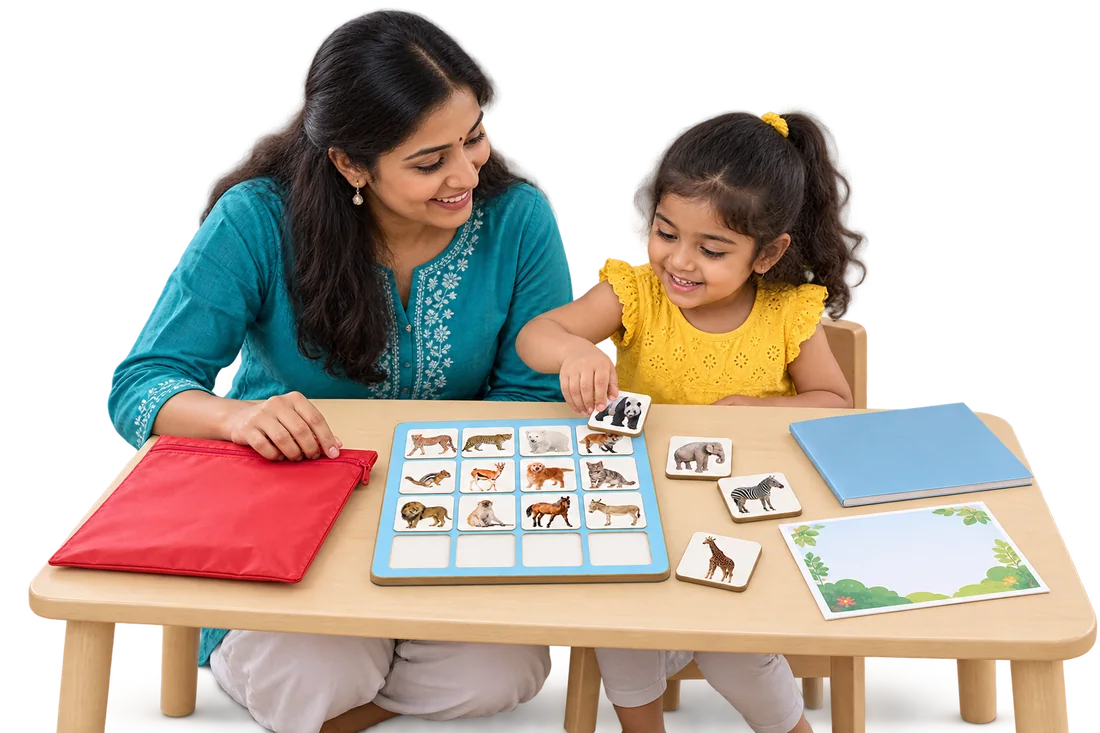
Each week's kit has a storybook, a Thinking Skills Game and a learning activity, chosen for the child's age. It comes in a slim waterproof kit bag, colour-coded by level.
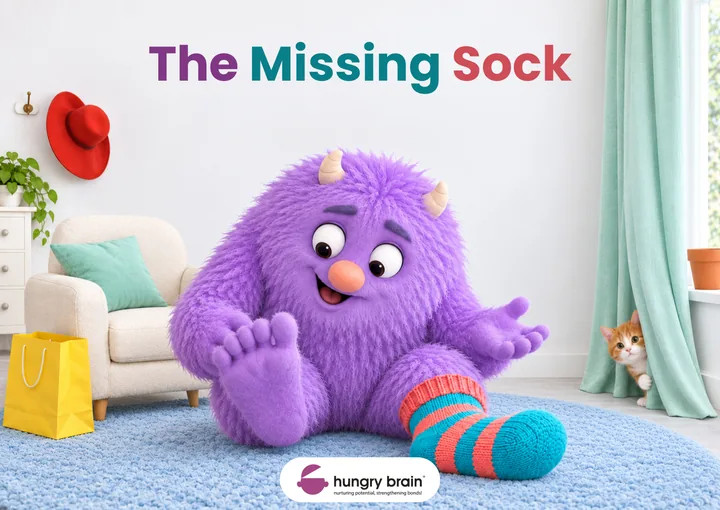
A storybook
Builds language while laying a strong foundation for values and ethics.
Original Hungry Brain stories about sharing, patience, family, friendship and feelings, including wordless picture books that let the child tell the story. Each book carries a short note for the parent on how to read it together.
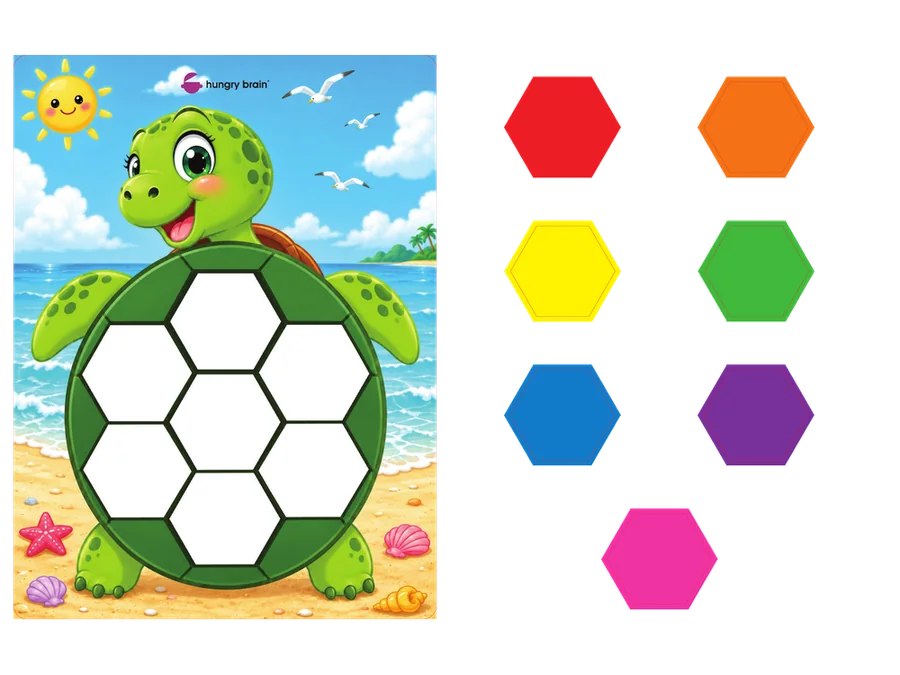
A Thinking Skills Game
Practice in observation, focus, memory and problem-solving.
Boards, pieces and 24-card challenge sets: matching, decoding, patterns, mirror images, directions, shapes and numbers. Each game is made for one level and gets a little harder as the child grows.
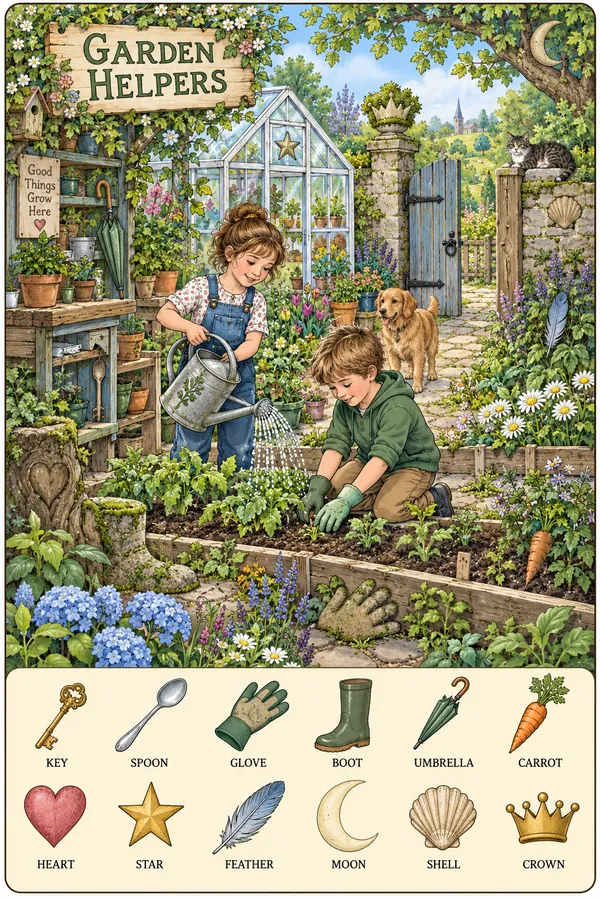
A learning activity
Encourages children to look closely, ask questions and work things out.
Picture talks, spot-and-find scenes, hidden pictures, counting scenes, vocabulary pages and story-sequencing cards: the kind of slow, close looking that screens rarely ask for.
Made level by level, so the library grows with the child
Machines will answer questions. Children still need to learn how to think.
Every kit gives children opportunities to observe, focus, remember, solve and talk, and to think independently and understand others.
Observation
Noticing small differences, details and patterns.
Try: Shadow Match, Spot What, hidden pictures
Attention & focus
Staying with one task long enough to finish it.
Try: Turtle Hexagons, Dotted Path, Ferris Wheel
Memory
Holding a picture, a rule or a sequence in mind.
Try: Mirror the Colors, story sequencing
Problem-solving
Trying, checking and trying again.
Try: Gift Sudoku, Triangle Decoding, Build the Town
Language
New words, retelling and talking about feelings.
Try: Storybooks, picture talks, vocabulary pages
Turtle Hexagons. Can you copy the card?
This is game 1.14 from the Playgroup level, exactly as it goes home in a kit: the same board, the same seven pieces, the same 24 cards. Look at the card, then put each colour in the same place on the turtle's shell.
Look at the card. Tap a hexagon, then tap its place on the turtle. Or drag it.
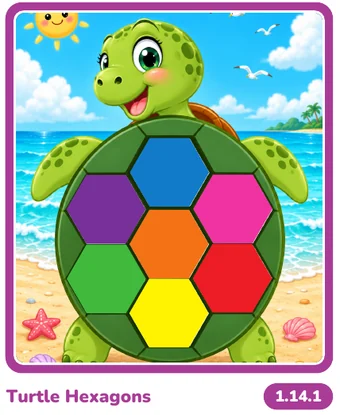
Every game comes with its own How to Play video.
Parents never have to guess. When Turtle Hexagons goes home, this is the exact step-by-step video they see in the app: what’s inside, how to play, and how to check the answer together. Every game in the library has one.
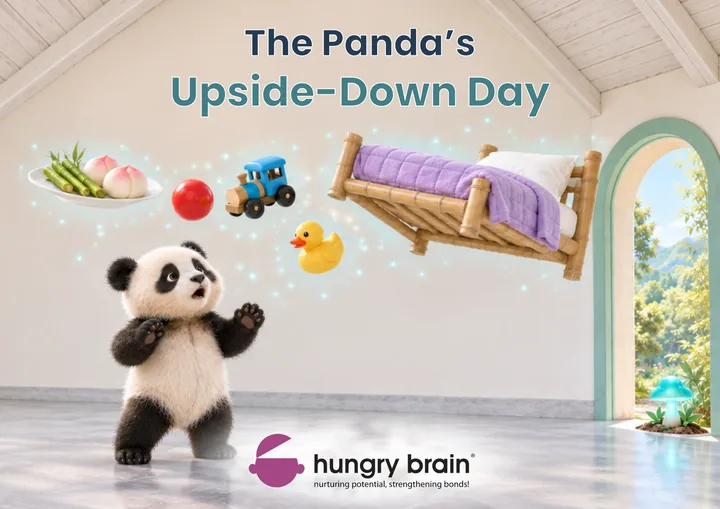
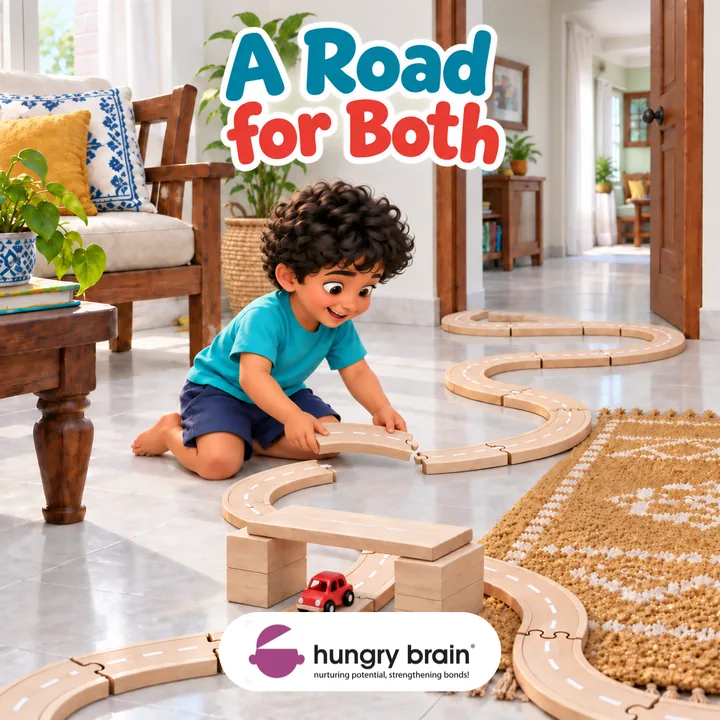
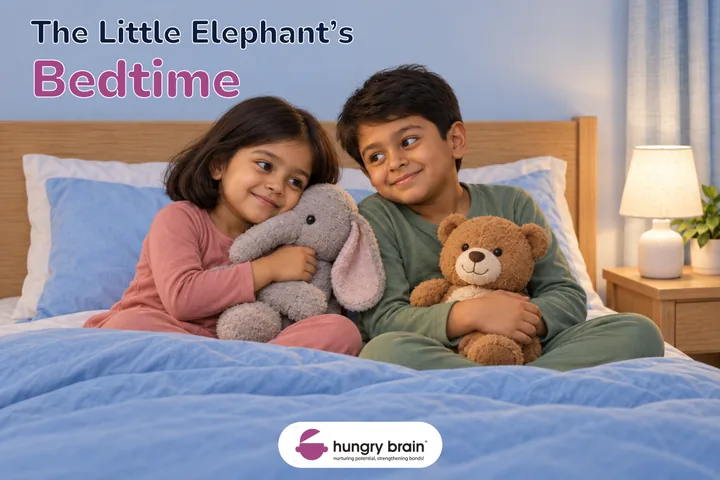
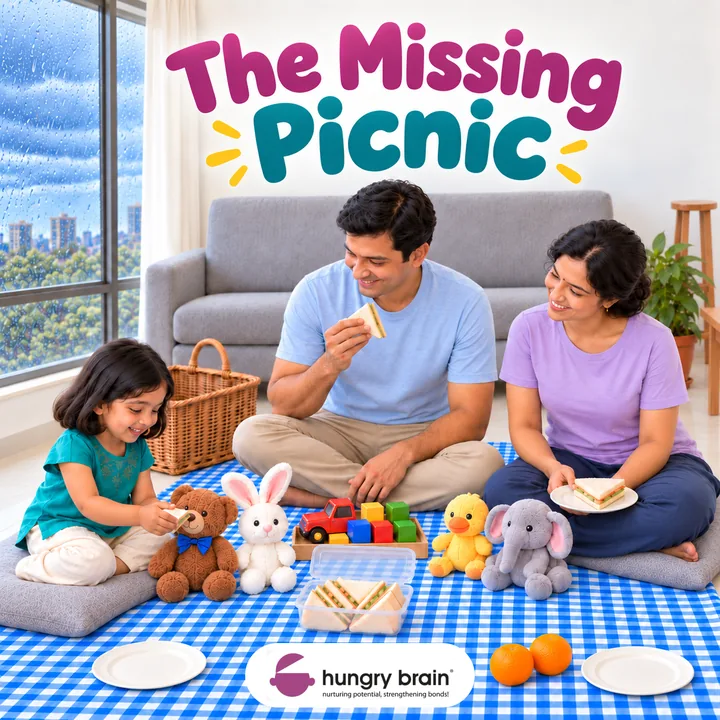
Original stories, made for Indian children.
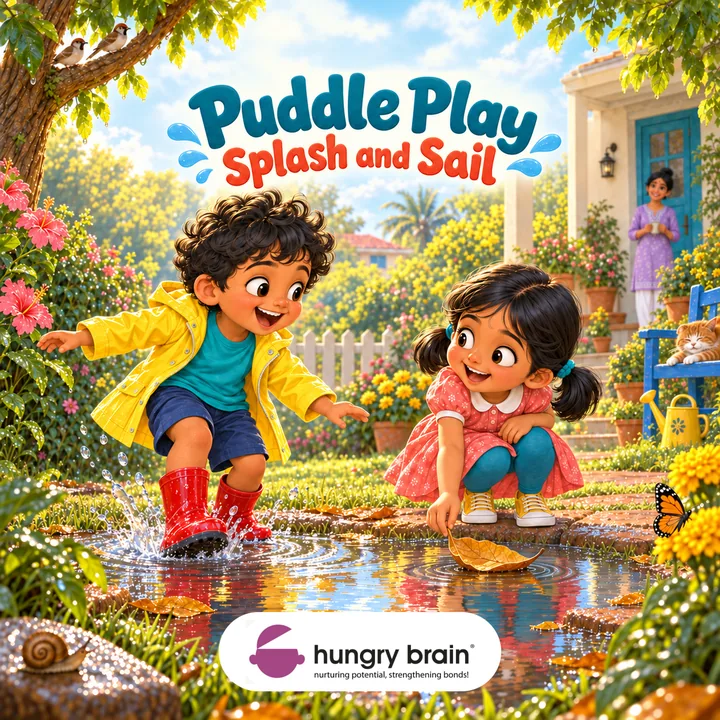
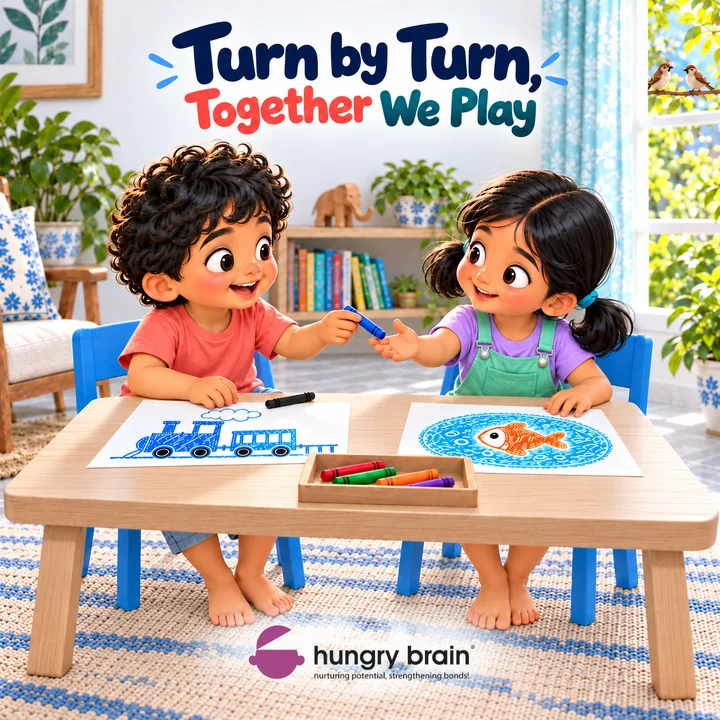
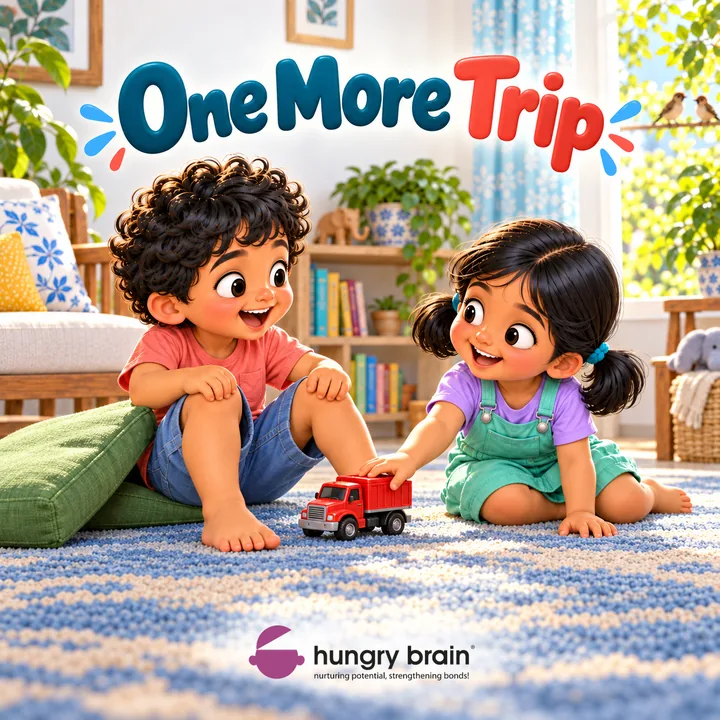
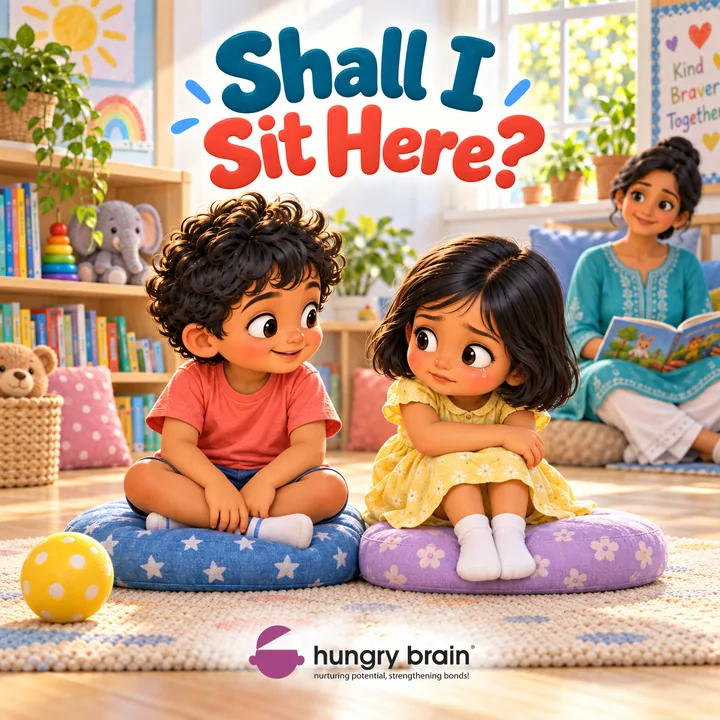
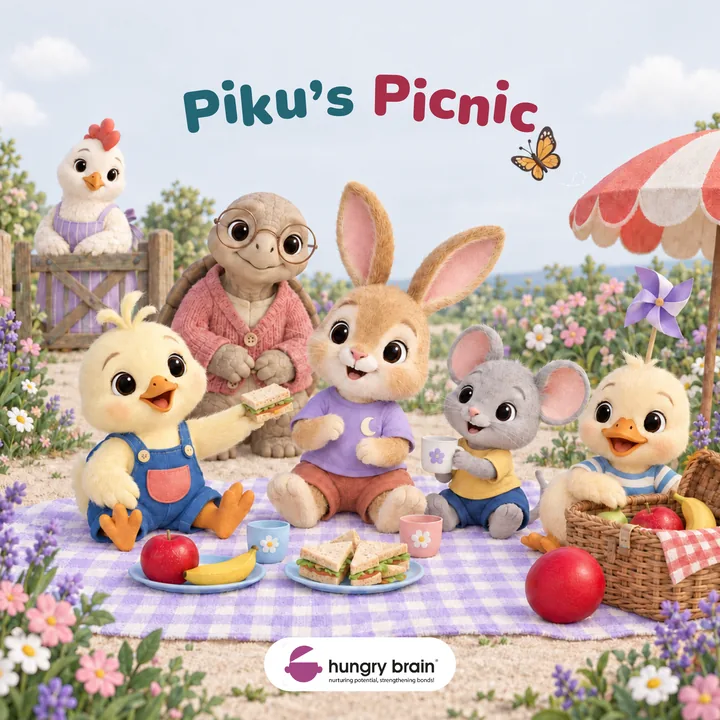
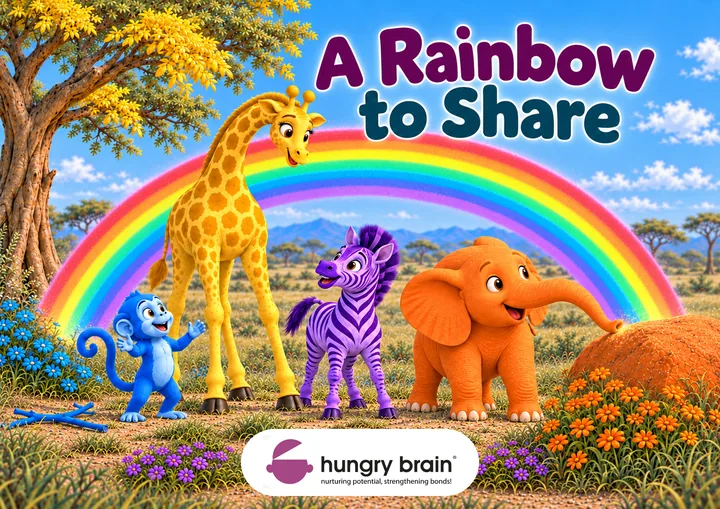
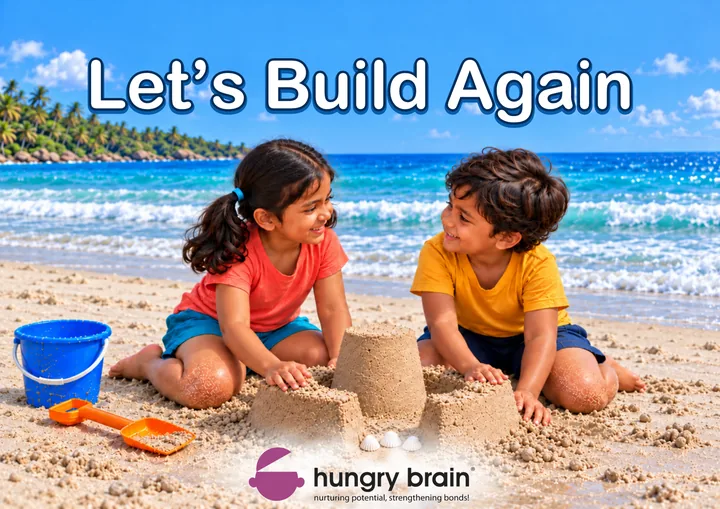
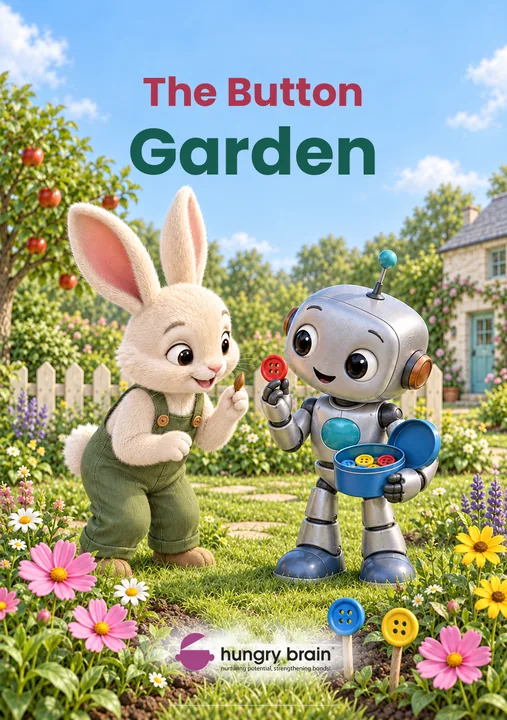
A peek at the storybooks written and illustrated by the Hungry Brain team: sharing, patience, family, feelings, and wordless picture books that let children tell the story themselves. Drag to spin.

Run it in your school. Or from your home.
Hungry Brain sets up the whole library: the kits, the app, the parent guidance and the stationery. You focus on the children and their families.
An app that runs the library, so you don’t have to.
The app tells parents exactly how to use each kit, tells your team exactly what to do, and keeps every record on its own. Children never touch a screen; the app is for the grown-ups.
1.We set up your library
Kits arrive ready to use, sorted by level, with kit badges, library cards and stationery designs. Your library is created in the app for you.
2.We walk your team through it
A guided walkthrough of the app and the admin panel: enrolling a child, handing over a kit, checking it back, step by step.
3.Parents are guided in the app
Simple guidelines and step-by-step videos show parents exactly how to use each week's kit, so your staff don't have to explain it.
4.The records keep themselves
Who has which kit, what came back, each child's activity history, parents' feedback and photo journeys. No registers, no spreadsheets.
Left: a real How to Play video parents get in the app. Right: an illustrative admin screen.
Hungry Brain started as a library at home.
Twenty-three years ago our founder, educator Hemali Gada, lent toys and books to families from her own home in Mumbai. Everything Hungry Brain makes today grew from that library. Now the library is back, rebuilt for today's children.
- 2003
A library at home
On 9 December 2003, Hemali Gada opened a toy and book library from her home in Kandivali West, Mumbai.
- 2005
Toyland Library
The library moved to Malad West as Toyland Library. Families kept coming back, and soon the room was too small.
- 2007
Kiddos Library
A bigger 500 sq ft library, alongside Hemali's Edupark for children's skills and reading workshops for parents.
- 2012
Mind Wealth
The first Hungry Brain flashcards, then games, programs and courses for parents across India and abroad.
- 2016
Hungry Brain
The Hungry Brain brand is born, with guided programs that thousands of families have used at home.
- 2026
The library, reimagined
Back where we began: a library, rebuilt with original books and games, an app, and a model any school or parent can run.
Built on what we know about little brains.
Everything you wanted to ask at the stall.
Fees, kits, the app, damage, time, earnings. If it isn't answered here, it's on the full FAQ page, or one message away.
What is the Hungry Brain Library?+
A take-home library for the preschool years. Every week a child takes home a kit with a storybook, a Thinking Skills Game and a learning activity, uses it with a parent, and brings it back for the next one. Hungry Brain sets the whole library up for a preschool or for a parent who runs one from home: the kits, the app, the parent guidance and the stationery.
What exactly is inside a kit?+
Three things: a storybook, a Thinking Skills Game and a learning activity, packed in a slim waterproof kit bag that is colour-coded by level. The kit also carries a kit badge, and the app holds the step-by-step guidance for that week's kit.
Do children use a screen?+
No. Children only touch books, game pieces and activity pages. The app is for adults: it guides the parent and keeps records for the school or library owner.
How does the School Library work?+
Your school enrols each child in the app. Each week a teacher or support staff member gives the child a kit and taps to record it. When the kit comes back, they check it and update the app, then hand over the next one. That is all your team does. Hungry Brain takes care of the rest.
How can the library earn for our school?+
Your school pays once for a year's kits and uses them over multiple years. The library fees you collect from parents stay with your school as additional income. We will walk you through the numbers for your enrolment in the demo.
How much does it cost to start?+
₹1,25,000 + GST per level, as an initial payment. You can start with one level. From year 2 there is an annual charge of ₹1,000 per registration.
How much can I earn?+
In our example, 40 families in one level in year 1 pay ₹2,00,000 in fees, which is ₹75,000 above the ₹1,25,000 setup, plus ₹20,000 in registration fees if you collect them. Break-even is 25 families. From year 2, 40 families in each of four levels comes to about ₹53,333 a month on average. These exclude GST and your running costs and are not a guarantee. Try the calculator on the Home Library page.
Let's meet virtually.
Book a short video call. We'll show you a real kit, walk you through the app, and answer every question about your school or your home library.